The Sacred Connection: Cow Pooja and Daan During Pitru Paksh for Ancestral Blessings and Relief from Suffering in Sanatan Dharma
In Sanatan Dharma, the sacred observance of Pitru Paksh combined with the revered practice of Cow Pooja and charitable daan holds profound spiritual significance rooted deeply in Vedic wisdom, Hindu scriptures, and astrological principles. This sacred linkage offers a powerful pathway to honor ancestors, remove sufferings, and awaken blessings that manifest as miracles, reaffirming the eternal bond of dharma within family and cosmic order.
The Vedic Foundation of Cow Pooja and Daan
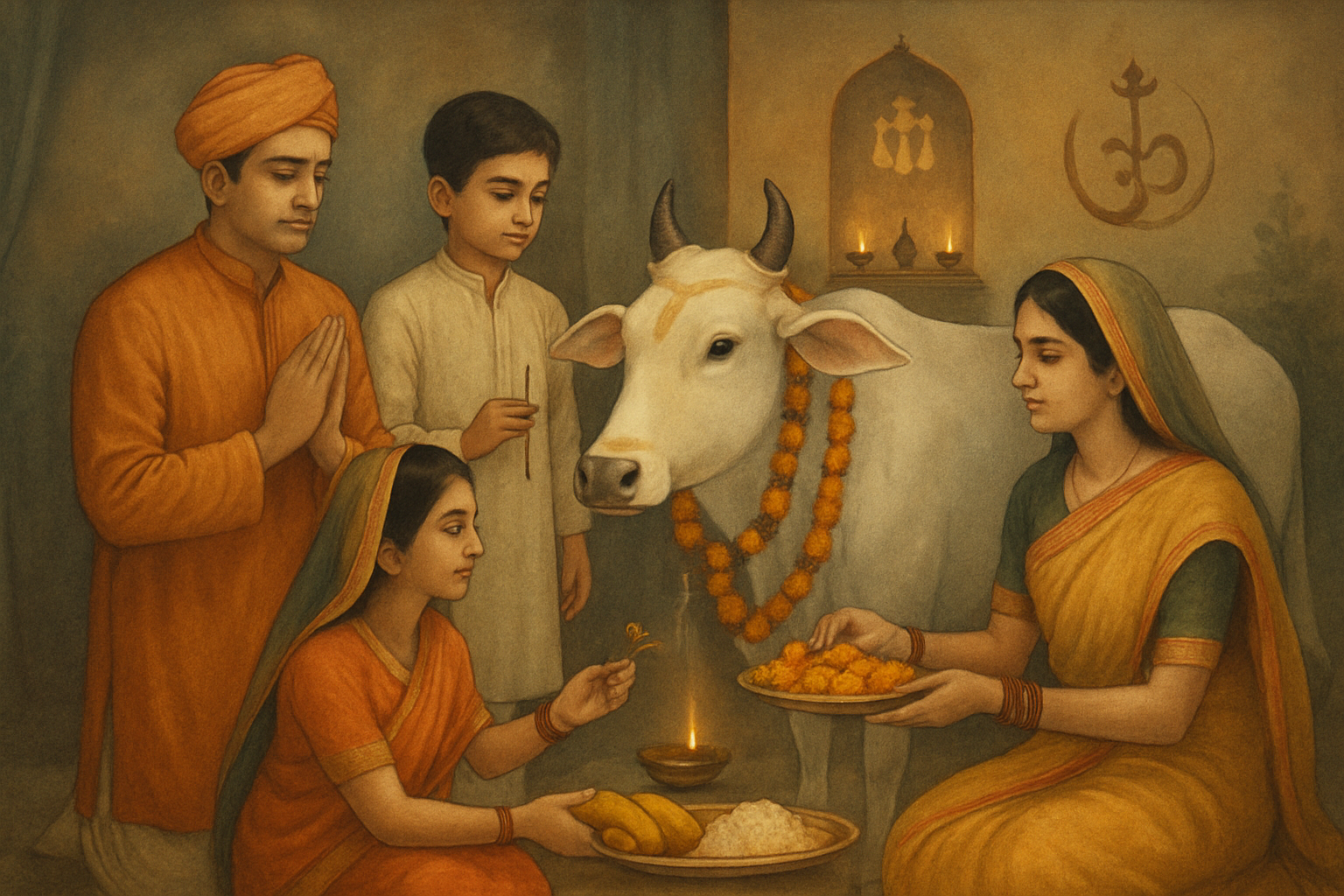
The cow, known as Gomata (mother cow), is celebrated in the Vedas as a divine symbol of life, nourishment, and purity. The Rigveda and Atharvaveda describe the cow as embodying all gods and goddesses and as a cosmic force sustaining humanity’s spiritual and material needs. Donation of a cow (Godaan) is considered the highest form of daan (charity), capable of dissolving accumulated karmic debts and elevating the donor’s soul. This act is viewed as an offering not just to the animal but to the cosmic order, which sustains all life [Vedas].
In Hindu scriptures, the products of the cow—milk, ghee, and dung—play a crucial role in sacred rituals (yajnas) and spiritual purification. Serving the cow is equated to serving Lakshmi (prosperity) and Vishnu (preserver of the universe), and it is believed to multiply spiritual merit exponentially.
Pitru Paksh: Honoring the Ancestral Lineage
Pitru Paksh is a sixteen-day lunar phase dedicated explicitly to appeasing one’s ancestors (pitrs). The Vedas and the Garuda Purana instruct that offerings and donations during this period release ancestral souls from suffering and grant peace and liberation. The Shraddha rituals performed during Pitru Paksh are designed to cleanse past karmas accumulated by ancestors, both alleviating their difficulties and establishing harmony in the present family lineage [Hindu Scriptures].
The Astrological Perspective
Astrologically, the ancestors are linked to the Pitru Dosha, a karmic affliction that can influence suffering, delays, and challenges in this life. Donations and rituals performed during Pitru Paksh are believed to pacify these doshas—especially when linked with gifting and worshipping cows—because the cow is associated with all nine planets (Navagrahas), harmonizing planetary energies that affect one’s life negatively [Vedic Astrology].
The act of cow donation is said to have a unique cosmic effect, balancing Saturn and Mars afflictions which are often triggers for Pitru Dosha. This harmony brings relief from diseases, improves financial conditions, and fosters peaceful family relations.
Why Donation During Pitru Paksh and Cow Puja is Essential
In Sanatan Dharma, donation during Pitru Paksh—especially cow donation—is not merely a ritual but an act of profound gratitude, dharma, and cosmic alignment. It binds the living and the departed in a sacred cycle of mutual upliftment. The Vedic texts emphasize that such acts purify the donor’s consciousness, remove obstacles, and attract ancestral blessings that manifest into miracles such as:
Healing from chronic ailments
Resolution of long-standing financial or familial problems
Protection from negative planetary influences
Spiritual growth and eternal peace for ancestors and descendants alike
These miracles are the direct fruit of aligning one’s actions with cosmic law (Rta), which governs cause and effect at cosmic and personal levels.
Summary
The intertwining of Cow Pooja and donation during Pitru Paksh stands as a luminous tradition in Sanatan Dharma—one that feeds the soul, honors ancestors, and removes suffering through sacred giving. Rooted in the ancient Vedas, elucidated by Hindu scriptures, and validated by astrological wisdom, this practice is a powerful spiritual tool that offers blessings, prosperity, and liberation beyond the visible world.